

 English
 Български
 Čeština
 Dansk
Dansk Nederlands
 Eesti
Eesti Suomi
Suomi Français
 Deutsch
 Ελληνικά
 Magyar
 Gaeilge
 Italiano
 Latviešu
 Lietuvių
 Malti
Malti Polski
 Português
 Română
 Русский
 Slovenčina
 Slovenščina
 Español
 Svenska
For privacy-conscious users, how you pay for a VPN matters almost as much as the VPN itself. Paying by card ties your real identity — name, bank, billing address — directly to your account. Cryptocurrency offers a different trade-off. This article explains how crypto VPN payments work, what privacy they give you, and where the limits are.
Why the payment method matters
A VPN protects your connection, but your account still exists somewhere. If you paid by card, your provider and its payment processor hold a record linking that account to your financial identity. For most people that is fine; for privacy-minded users it is an extra data trail they would rather avoid. Cryptocurrency breaks that direct link — you do not hand over a card number, bank details, or billing address.
How crypto checkout works
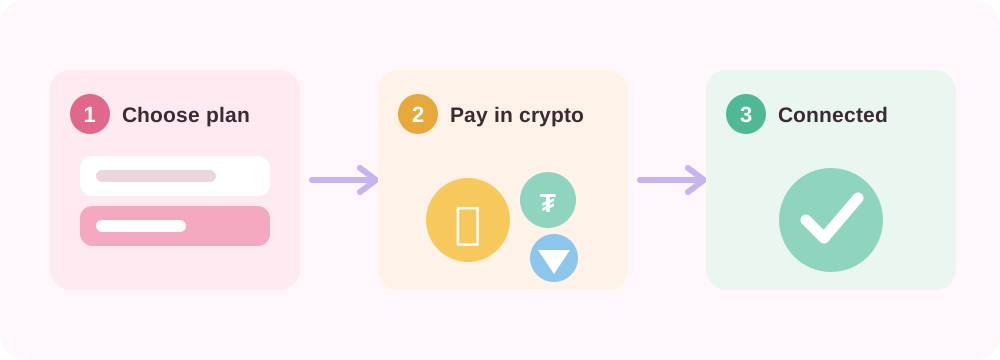
The flow is simpler than it sounds:
1. Choose a plan and select cryptocurrency at checkout.
2. Pay the generated invoice with a supported coin — Bitcoin, USDT, TON and others.
3. Once the payment is confirmed on-chain, your subscription activates automatically.
At Nekoway, payments are handled by a payment provider, and we never store private keys, seed phrases, or card numbers. Your VPN link appears in your account as soon as the payment clears.
The real privacy benefit
The benefit is concrete: less personal financial information tied to your VPN account. No card, no bank, no billing address on file. Combined with a no-log VPN design, it reduces how much any single record can reveal about you.
The honest limits
It is important to be realistic. Cryptocurrency is pseudonymous, not perfectly anonymous:
- Most blockchains are public ledgers. Transactions are visible, even if names are not attached.
- If you bought crypto on an exchange that knows your identity, that link can sometimes be traced.
- Reusing the same wallet across many services can build a profile over time.
Crypto payment is a meaningful privacy improvement over cards — but treat it as one layer, not a guarantee of total anonymity. Anyone promising "100% anonymous" is overselling.
Practical tips
- Double-check the network, amount, and wallet address before sending — blockchain transactions are usually irreversible.
- Keep your receipt; Nekoway generates a branded receipt for each payment in your account.
- Review the Refund Policy before you pay, since crypto refunds work differently from card chargebacks.
Is a crypto VPN right for you?
If you value keeping your financial identity separate from your VPN account, crypto payment is a strong fit. If you prefer the familiarity and reversibility of cards, that is a valid choice too — just understand the trade-off. Nekoway currently accepts cryptocurrency during its beta. You can see the plans or read more on the crypto VPN page.
Frequently asked questions
Which coins can I pay with? Popular options like Bitcoin, USDT and TON, among others supported at checkout.
Is crypto payment anonymous? It is pseudonymous. It avoids sharing card details, but public blockchains and exchanges can still link activity to identities in some cases.
What if I send the wrong amount? Because blockchain transactions are usually irreversible, always verify the network, amount, and address first. If something goes wrong, contact support.